Entry · Ref 0VDVZPUE
Overload vs. Wiring Fault: What Causes Breaker Trips?
- Posted
- 2026-11-24
- Last amended
- 2026-11-24
- Account
- @circuitsense
A circuit breaker that trips repeatedly is more than a nuisance. It signals that something in the electrical system needs attention. Two common causes stand out: an overloaded circuit and a wiring fault. Though the result looks the same - the breaker shuts off power - the underlying problems are quite different. Knowing which one you have helps you decide what to do next.
How a circuit breaker works
A circuit breaker is a protective device inside the electrical panel. It monitors the current flowing through a branch circuit. When the current exceeds the breaker's rating for a certain period, the breaker trips to prevent overheating in the wiring. A short circuit or a ground fault will also cause an instant trip, because the current spike happens almost without delay. The breaker's job is to stop current before the wires get hot enough to damage insulation or start a fire.
Overload: too many devices on one circuit
An overload happens when the total electrical load on a circuit exceeds its safe capacity. This is common in homes where several high-wattage appliances share the same branch circuit. Think of a kitchen counter with a microwave, a toaster oven, and a coffee maker all running at once. Each draws current, and together they can push the circuit past its rating. The breaker trips to protect the wiring.
Signs of an overload include:
- The breaker trips after the load has been running for a while, not instantly.
- Plugging in one more appliance or turning on a high-wattage device causes the trip.
- The same breaker trips at roughly the same time of day, when your usage pattern is consistent.
Fixing an overload usually means redistributing the load. Move some appliances to a different circuit. Or, if the circuit is undersized for the space, an electrician can install a new dedicated circuit. That is a job for a qualified professional, as it involves work inside the electrical panel and running new wiring.

Wiring fault: a different kind of problem
A wiring fault covers several conditions: a short circuit, a ground fault, or a loose connection. Each can cause a breaker trip, but the cause is not too much load - it is a defect in the wiring or in a device plugged into the circuit.
A short circuit occurs when a hot wire touches a neutral wire or another hot wire. This creates a low-resistance path that lets current surge instantly. The breaker trips immediately. A ground fault is similar, but the hot wire touches a grounded surface, like a metal box or a copper water pipe. Ground-fault circuit interrupters (GFCI) are especially sensitive to this and will trip fast. A loose connection can cause arcing, which also generates heat and may trip a breaker.
Signs of a wiring fault include:
- The breaker trips instantly, even with very little load on the circuit.
- A specific appliance or outlet always seems to cause the trip, regardless of what else is running.
- You smell burning near an outlet or the electrical panel, or you see discoloration on a receptacle.
Wiring faults are more serious than overloads because they can cause electrical fires. If you suspect a wiring fault, stop using the affected circuit and call a professional. Do not simply reset the breaker and continue.
How to tell them apart
Start by noting what happens when the breaker trips. If it trips right after you turn on a high-wattage device, that could be an overload. If it trips when nothing new is plugged in, or if it trips instantly every time, a wiring fault is more likely. Another clue: an overloaded breaker may feel warm to the touch (but only the breaker handle - never touch exposed wires). A breaker that trips from a wiring fault often does so cold.
If you have a multimeter and know how to use it safely, you can measure the circuit load. But for most homeowners, the simplest approach is to unplug everything on the circuit, reset the breaker, and then plug devices back in one by one. If the breaker trips only when a particular device is plugged in, that device might have an internal fault. If the breaker trips with nothing plugged in, the problem is in the home wiring.
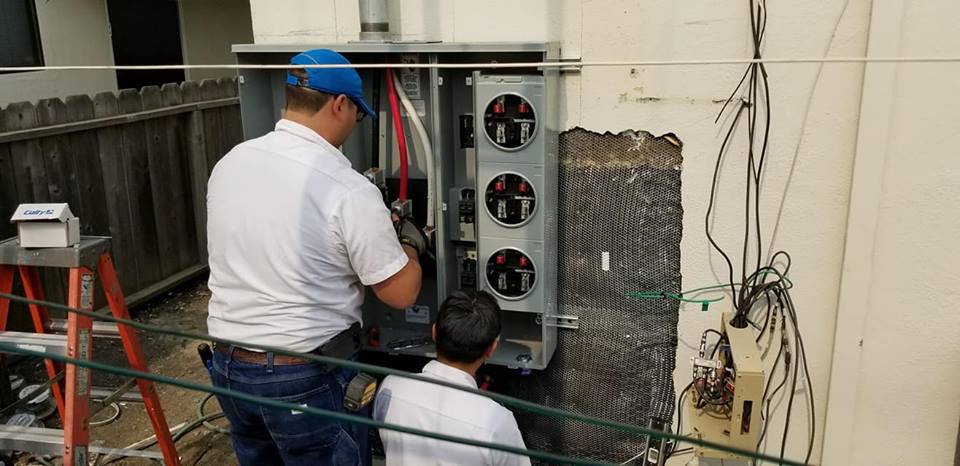
Remember: work on an electrical panel or on live wiring is dangerous. If you need to open the panel or test inside it, call a licensed electrician. Wooding Electric provides residential and commercial electrical troubleshooting, repairs, and wiring improvements in San Jose and surrounding Bay Area cities. They can evaluate your electrical panel and identify the root cause of a persistent trip.
When to consider an electrical panel evaluation
An electrical panel evaluation is a thorough inspection of the panel, its breakers, and the connections inside. It is a good idea if you have frequent trips, if the panel is old, or if you are planning major renovations. During an evaluation, an electrician checks for signs of overheating, loose connections, corrosion, and proper breaker sizing. They can also test for ground faults and verify that the panel is not overloaded overall.
If your breaker trips often and you cannot trace it to a single appliance or circuit, an evaluation may reveal a deeper issue. For example, an older panel might have a breaker that is worn out and needs replacement. Or the panel itself could have a wiring fault that affects multiple circuits. A professional can measure voltage drop, check for arcing, and ensure the panel meets current code.
An evaluation is especially useful in older homes where the electrical panel may have been updated piecemeal over the years. Inconsistent breaker brands, mismatched wire sizes, or a panel that is full to capacity all point to a need for professional assessment. Wooding Electric has experience with both residential and commercial panels and can provide a clear diagnosis.

What not to do
Never ignore a tripping breaker. Each trip is a sign that something is wrong. Do not replace a breaker with a larger one to stop the trips - that can overheat the wiring and cause a fire. Do not reset a breaker repeatedly without investigating, especially if the trip happens fast. And never work inside the panel while it is live. If you are unsure, get help.
Understanding whether you have an overload or a wiring fault is the first step. Overloads are usually easier to fix by changing how you use the circuit. Wiring faults need a closer look by a professional. Either way, a careful approach keeps your home safe and your electrical system reliable.